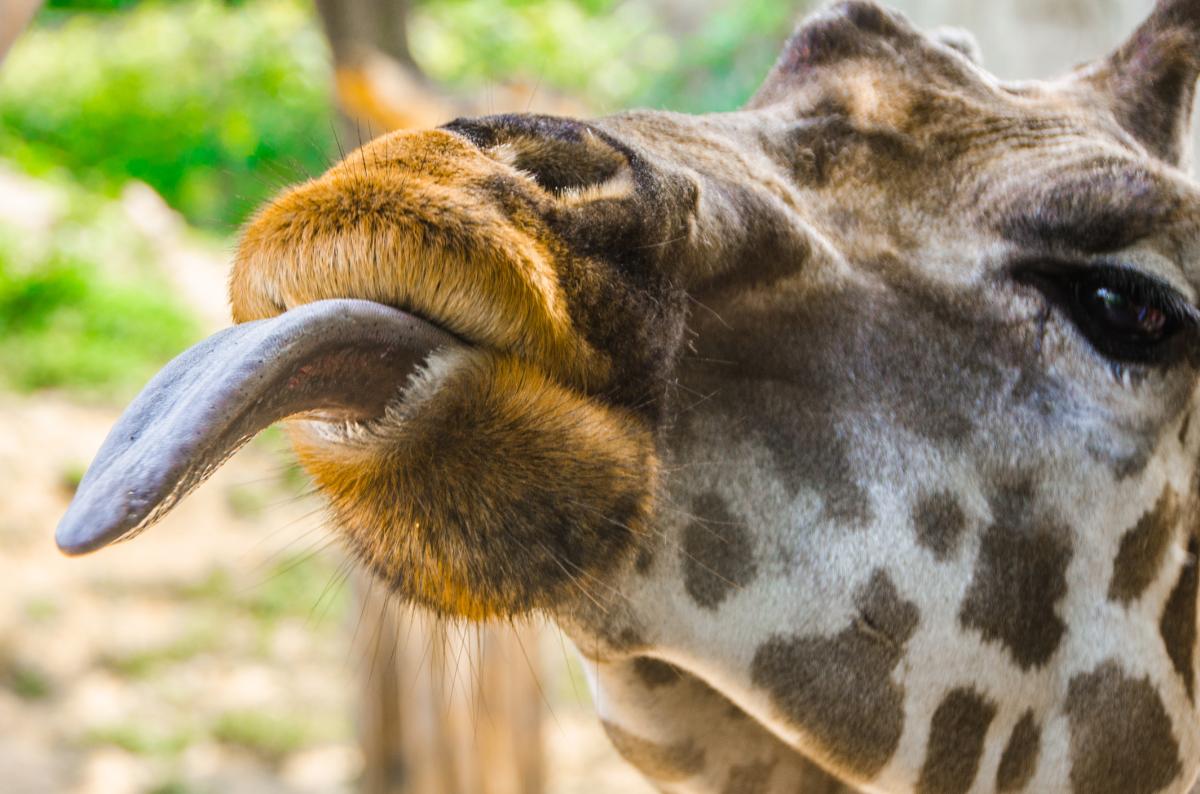
They can be blue like that of a giraffe, very long like that of an anteater or fast like that of a chameleon. Tongues are one of the most versatile and varied organs in the animal kingdom. And also surprising. The evolution of animal languages has a curious path. That of macaws, for example, like those of all parrots, has a bone inside. It allows them to manipulate their food. It helps if you eat a lot of seeds and nuts. But at some point deep in our evolutionary history, macaws and humans shared a common ancestor.

Types of languages
We evolved from fish ancestors, and those ancestors foraged in water. Living on land, they needed to capture food and manipulate it in their mouths without involving water. The vast majority of fish use suction: they rapidly expand their mouth and throat and absorb water. Any prey that gets caught enters the mouth. But on earth this does not happen. With gravity, food has weight. You have to pick it up and physically put it in your mouth. Instead of sucking, the tongue is now used and the prey is captured with it.
The evolution of languages is hundreds of millions of years old. It started as a simple way to put food in your mouth. It evolved to become as different as cats and dogs. In felines, rough like sandpaper; and in the canines, softer and more flexible. Animals have different types of languages. Cows have modified papillae that allow them to grab grass and trim it with their tongue. In the case of frogs, they have a sticky tongue. One of the most well-known and feared languages is that of the king cobras. They are the largest venomous snakes in the world. It is long, dark, forked. It helps you look for chemical signals in the environment.
Mechanism
The evolution of languages in humans helps us distinguish sweet from bitter, the temperature of food or if there is a bone in the fish. And if this were not enough, he has a less showy but vital talent. Every time we swallow, the tongue saves us from disaster. The tongue pushes food back through the oropharynx and into the esophagus. The problem is that the oropharynx is a crossroads: the respiratory and digestive tracts intersect there. To make it all work, the tongue narrows laterally and, as it does so, part of it moves backwards, pushing the food out. It is essential to quickly push food and prevent it from entering the lungs.
Leave a Reply