
The University of Cambridge became interested. Scientists from the Canary Islands Institute of Astrophysics (IAC) participate. They found a close analogue of the enigmatic 'Little Red Dots'. The red dots of black holes are an astronomical curiosity. A new window opens to understand how supermassive black holes formed and grew in the early Universe. The observations made with the Gran Telescopio Canarias (GTC) are to characterize this object.
Understanding the cosmos
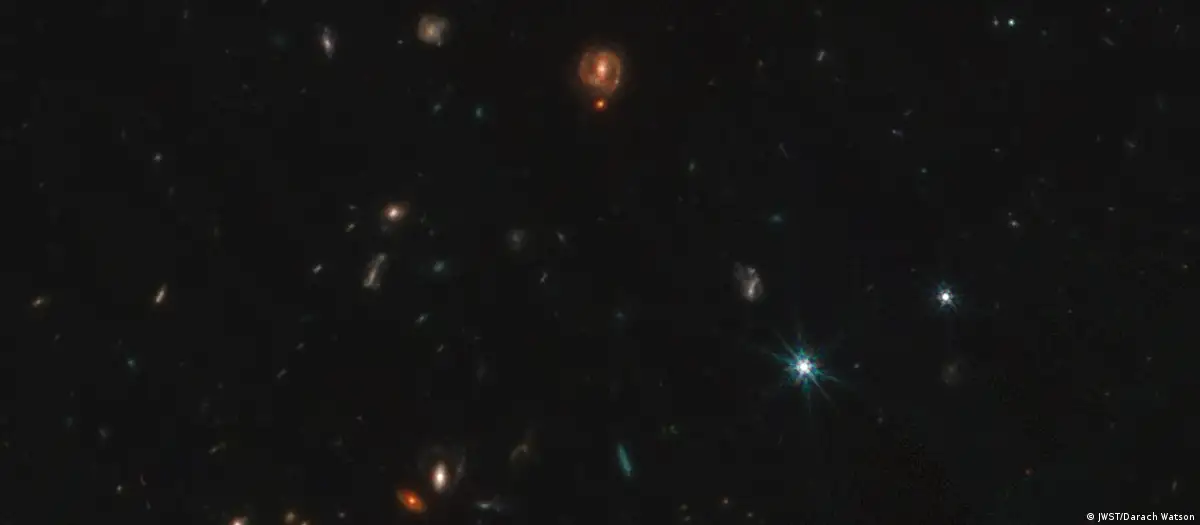
The 'Little Red Dots' (LRDs) are among the most interesting discoveries of the James Webb Space Telescope (JWST), according to a note from the IAC. They were first identified at great cosmic distances. They are from when the Universe was less than one and a half billion years old. They appear to host rapidly growing supermassive black holes. And they behave very differently from the active galaxies observed in the local Universe.
Now the first close counterparts of LRDs have been found. They are only a few billion light years from Earth. You can now study these objects with an unprecedented level of detail. And understand how some of the first black holes in the Universe formed and grew so quickly.
The first LRDs belong to 'Cosmic Dawn'. Unlike typical active galactic nuclei, LRDs are surprisingly weak in X-rays and infrared. They challenge current models of black hole growth. They are, effectively, active black holes surrounded by dense envelopes of gas that absorb the light emitted by them.
Nearby
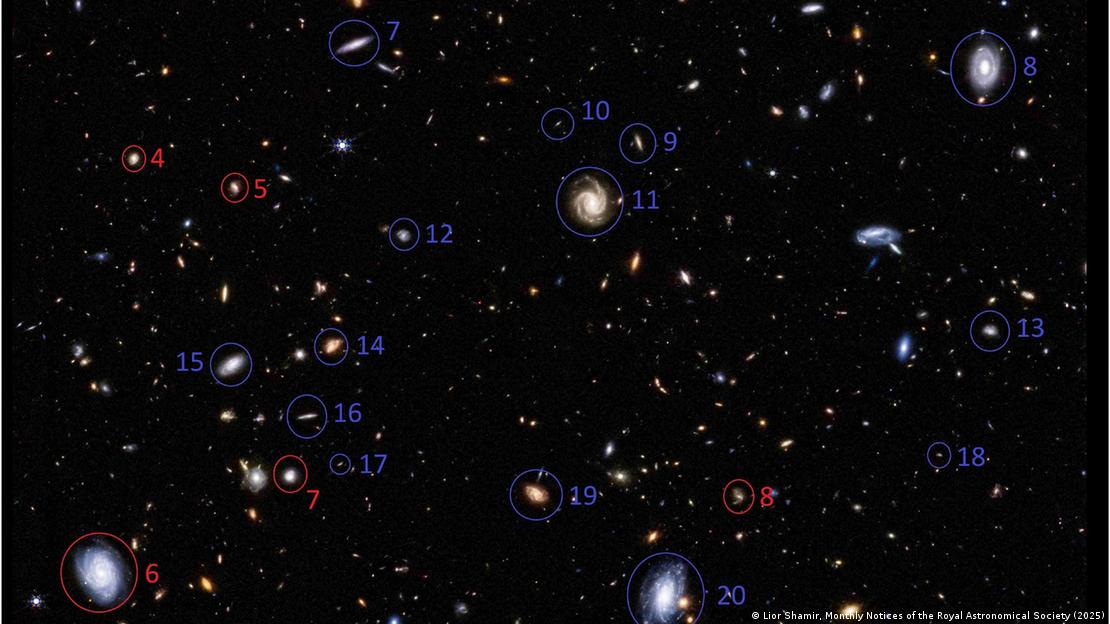
The discovery of the red dots of black holes a few billion light years from Earth changes everything. "They are unique laboratories," they point out. "We see in exquisite detail the dense gas environments that enable the rapid growth of black holes."
The implications are far-reaching. He insists that expanding the search for these objects will be crucial to understanding how common they are. And how they fit into the general framework of the evolution of galaxies and black holes. "This will be fundamental to improve our understanding of their counterparts in the early Universe," they explain.
Leave a Reply