
It is a widely used agricultural chemist. It applies to fruits and vegetables to prevent fungal diseases. But he is killing fundamental beneficial insects in pollination. Polinizers face a new risk: it is chlorotalonil, one of the most used agricultural fungicides in the world. It has a deep impact on the reproduction and survival of insects.
"Even the lowest concentration has a great impact on the reproduction of the flies we analyze." The main author, Darshika Dassawa, states it in a statement. "It is a great impact on the population over time. It affects both male and female fertility."

Species attack
The so -called vinegar fruit or fly was used as a laboratory model. It feeds on decomposition fruit and plays an important role in the recycling of nutrients in agriculture. The scientists presented larvae to typical levels of chlorotalonil.
Even with the lowest dose, there was a 37 % decrease in egg production when reaching maturity. «We expected the effect to increase much more gradual with larger quantities. But we discover that even a very small amount can have a strong negative effect ». The findings add to the growing evidence of what researchers call the "apocalypse of insects." It is the collapse of insect populations in more than 75 % in recent decades.
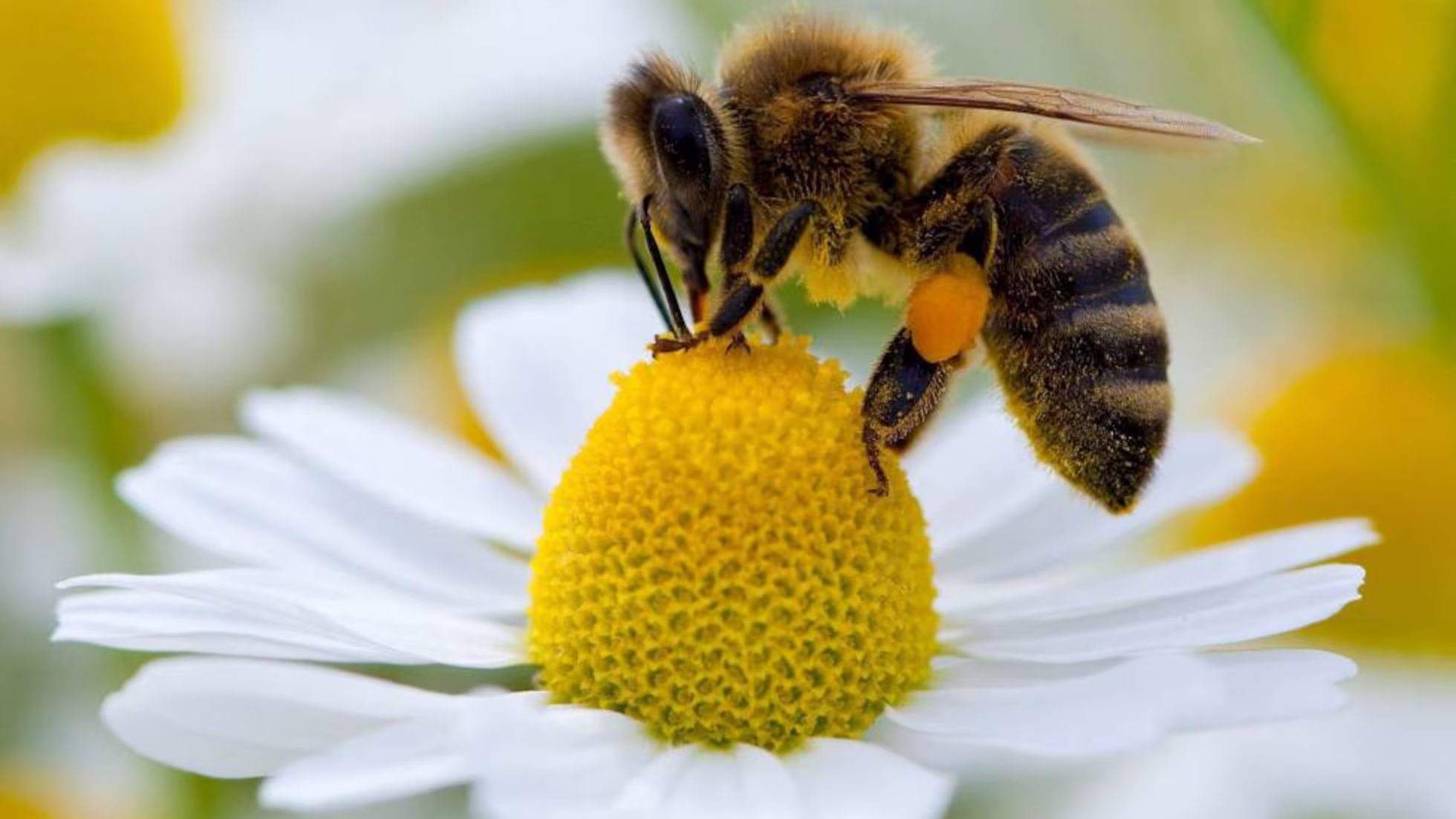
«Polinizers face a new risk. We need bees, flies and other beneficial insects for pollination. And chlorotalone is particularly common in orchards and vineyards. It is usually used in a preventive way when there are no present diseases, ”they explain. «It is assumed that fungicides such as chlorotalonym only affect fungal diseases. But they can have devastating and unforeseen consequences for other species, ”they indicate.
Infertility
The study revealed that exposure to chlorotalone during larval development caused serious reproductive damage in adult flies. The females showed a significant reduction in body weight. Also, less egg -producing structures, called ovariolas. And a drastically reduced egg production.
The males presented reduced iron levels. This suggests an alteration of essential metabolic processes for sperm production. The scientists also observed that the larvae consumed the food contaminated with normal, discarding the aversion to the taste as explanation.
Leave a Reply