
A team of researchers from MIT (United States) did it. It is a low-temperature process to extract battery-grade lithium from the most common lithium-containing mineral. The new technique for extracting lithium is economical and could influence the cost of this material.
The process uses a liquid reagent to dissolve the rock into the useful forms of its components. Not just battery-ready lithium salts. Also foundry grade alumina and silica suitable for cement. Once the minerals are extracted, the solvent and reagent can be recovered and reused. They thus reduce the amount of waste to practically zero.
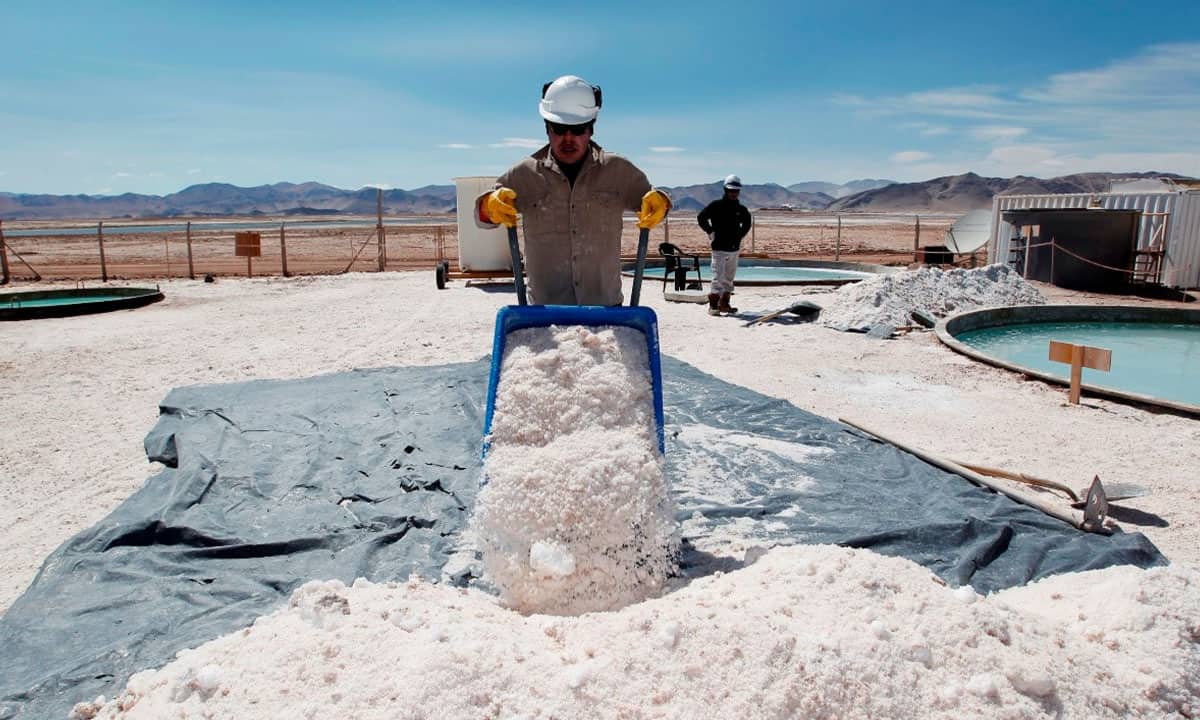
Rock and salt water
'Science' magazine publishes an article that describes the process. The researchers have already begun commercializing the technology through Rock Zero. It is a spin-off company from MIT. Demand for lithium has skyrocketed in recent years. Lithium-ion batteries power more and more devices around the world.
The United States, Europe and Australia have abundant lithium resources within their borders. But China dominates the global refining of this mineral. Extraction of lithium from hard rock is today an energy-intensive process. It generates a lot of waste, and is much more expensive than obtaining it from salt water. It involves heating the rock to more than 1,000 degrees Celsius and subjecting it to chemical leaching to extract the lithium. The rest of the rock is discarded.
The new technique for extracting lithium costs half as much as traditional extraction of lithium from hard rock. It could make it competitive in price with lithium extraction from salt water.

More batteries
By 2040, we need to quadruple global lithium production. This involves hundreds of new production facilities. Hard rock is abundant; It is found everywhere. However, most of its refining takes place in China. The new process can transform the lithium market. This coincides with the recent boost to domestic production of critical minerals in the United States.
Leave a Reply