
The 2026 excavation campaign at the Atapuerca sites is a success. It allowed the recovery of 24 new fossils of Homo antecessor. Among them some of adult individuals. Among the most notable finds are many bones. A fragment of the temporal bone of the skull, cervical and lumbar vertebrae, phalanges of hands and feet. Also three teeth and various long bones, including an ulna and fragments of the tibia, femur and humerus.
Adults
Researcher Andreu Ollé highlighted that what is relevant is finding "remains belonging to adult individuals." Until now, this age group was poorly represented in the Homo antecessor fossil assemblage. The remains found correspond to people between 27 and 30 years old. They allow us to estimate the presence of between two and six adult individuals.
Several of these remains have cut marks produced during the defleshing of the corpses. It is evidence that reinforces cannibalism practices. The same thing was previously documented in this enclave from approximately 850,000 years ago.
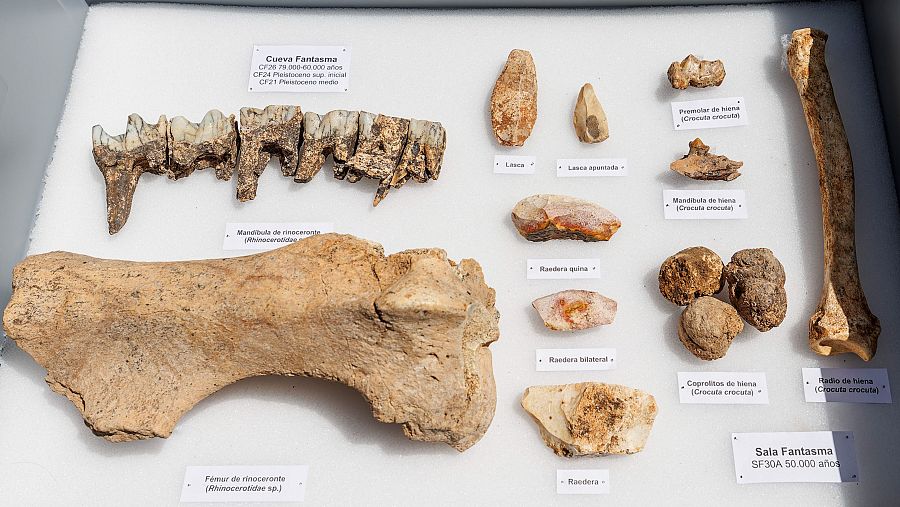
The campaign brought to light an abundant collection of stone tools. They are made with different raw materials, including flint, quartzite, sandstone and quartz. Added to this are numerous remains of fauna. There are species such as hyena, beaver, deer, bovid, horse and rhinoceros. It is a set that provides valuable information about the Lower Pleistocene ecosystem.

Exceptional fresh
The 24 new fossils of Homo antecessor are added to the lithic remains and faunal remains. It is an exceptionally complete picture of human occupation in Atapuerca. There are very few sites in the world capable of providing, in a single excavation campaign, twenty human fossils. Furthermore, associated with stone tools and animals consumed by these groups.
Levels of Neanderthal occupation and others linked to hyena activity were located. The campaign has confirmed that the hyena den documented in the cavity extends to the cutting wall. Numerous coprolites and hyena bone remains were recovered, along with bear, rhinoceros and horse fossils.
Leave a Reply