
Where were they? The archaeologists of the University of Geneva found them in Senegal. They found the remains of a millenary quartz stature workshop. There appeared the 9,000 -year -old quartz tools. They publish results in PLOS One.
The populations of hunter-gatherers have been widely studied in Europe and Asia. But his presence in the immense Western Africa is not very documented. The subsistence of prehistoric hunters-gatherers depended on hunting, collection and fishing. This way of life dominated the history of humanity until the gradual emergence of ceramics, livestock and agriculture during the Neolithic.
Quartz skill
The discovery in 2017 of the Ravin Blanc X site in the Falmé Valley, Senegal, is key. And sheds light on these issues. It is exceptionally well preserved despite its reduced surface of 25 m2. It offers an exceptional snapshot of the early Holocene, the temperate interglacier era in which we still live. This period occurred after almost 10,000 years of serious drought in the region.
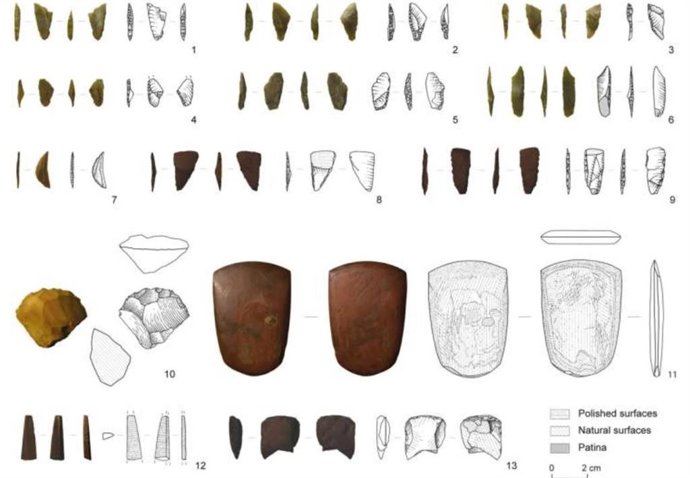
There was the workshop for the 9,000 -year -old quartz tools. «We find a lot of production waste. We rebuild them as if it were a puzzle. We rebuild the techniques used, the high quality quartz selection criteria and the skill of the carver, ”they explain.
The few archaeological sites of this period in Western Africa are characterized by very small stone tools. They are "microlitos", designed to be wielded and used as hunting weapons. Technical similarities were observed in its manufacturing with this quartz workshop.
In, sites further south, in tropical forest environments, they show different and more opportunistic technical options. The lack of standardization of the tools suggests that cultural groups were already quite different between regions.
Joint work
These results are the result of an interdisciplinary collaboration. The carbon of the fireplace was analyzed by carbon-14 specialists and anthracologists. They identified the wood species used to light the fire. The soils were studied by geomorphologists, sedimentologists and paleoambientalists. They defined the weather and landscape in which these quartz carriers lived.
Institutions from Switzerland, Senegal, France and Germany participated in this research. It sheds new light on the diversity of technical practices and material cultures in Western Africa at a crucial moment of transformation.
Leave a Reply