
Where does it live? In one place on the planet. The tropical forests of Malaysia, Southeast Asia. Sometimes the most extraordinary finds are hidden under the leaves. This is the case of the extraordinary “fairy lanterns”, a unique plant of its kind. She was discovered near Kuala Lumpur. It is a species until now unknown to science: Thismia selangorensis. It is barely 10 centimeters high and looks like something out of a fantasy story.
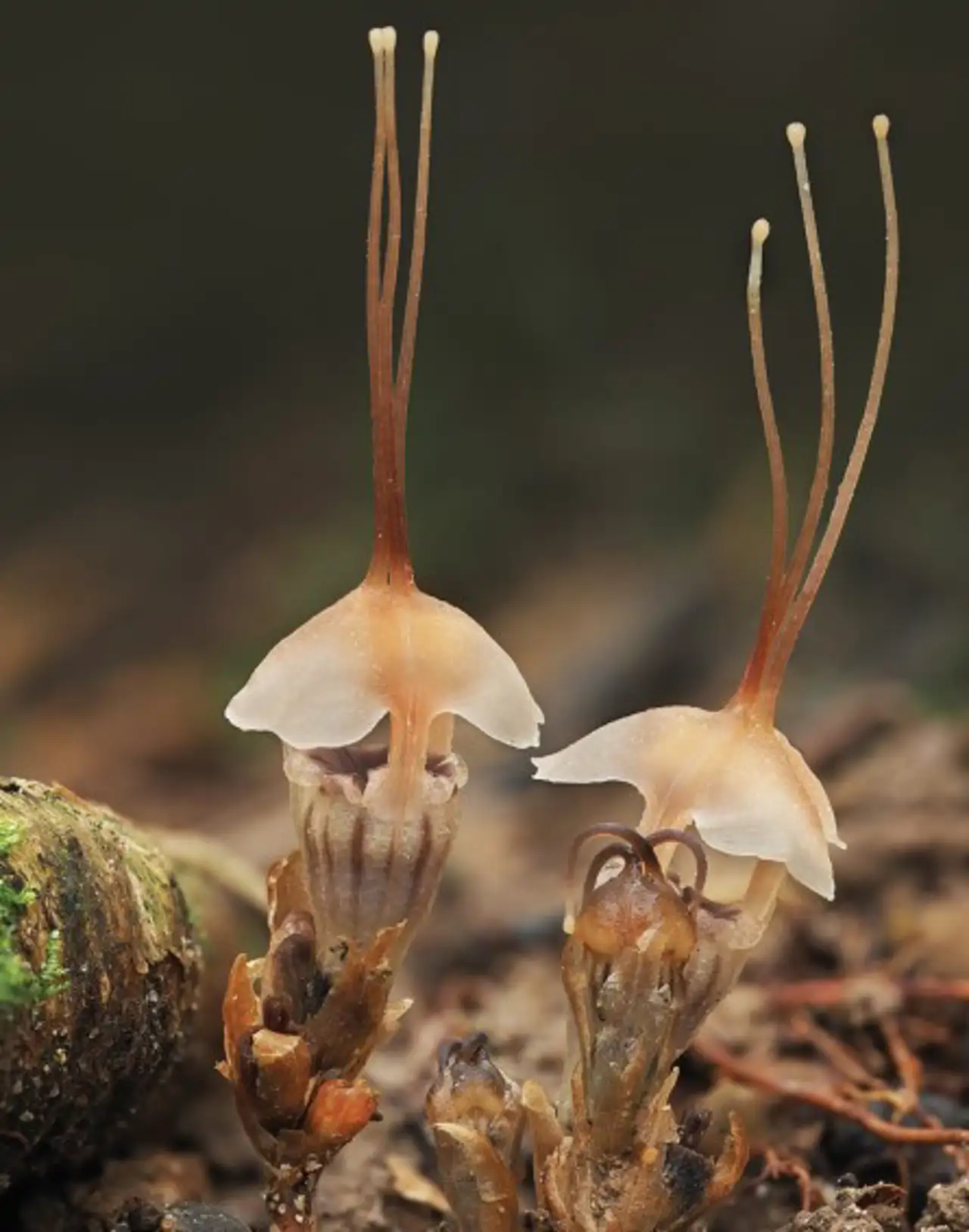
beautiful flower
Its peach to pink flower stands on a set of coral-shaped roots. Its structure is reminiscent of an inverted umbrella crowned by three thin appendages. They would be involved in attracting pollinators or in physiological functions yet to be understood. This is not a common discovery. The plant belongs to the genus Thismiacomposed of species that do not sustain themselves through photosynthesis like “conventional” plants. Instead, they have no chlorophyll and depend entirely on an underground parasite: fungi that live in the soil. They extract nutrients directly from the fungal hyphae with which they associate.
Only less than 20 individuals were found in an area of just 4 km². That figure, as low as it is disturbing, has led researchers to provisionally consider the species as critically endangered. These plants emerge only under very specific conditions of humidity and shade, typical of soils rich in leaf litter and in little disturbed forests. It depends on specific fungi and intact microhabitats. That is why they are extremely vulnerable to any alteration of the terrain.

Threatened habitat
Researchers stress the importance of protecting the habitat where it was found. They recommend restricting visitor access in the most sensitive areas, and closely monitoring the population to detect changes in their number or distribution.
They also call for increased public awareness. Many visitors to parks and reserves do not know that under their feet they may be stepping on a species that does not exist anywhere else on the planet. We live in a world where biodiversity faces increasing pressures. But the discovery of T. selangorensis reminds us that even the simplest corners of a forest can harbor hidden wonders. Protecting the smallest life is sometimes protecting the very health of our global ecosystems.
Leave a Reply