

An international study found changes in the behavior of the fauna that inhabits the Chernobyl exclusion zone. They are caused by the Russian invasion of 2022. For example, reduced nocturnal activity in deer and fox. Chernobyl's fauna is changing its habits. A network of camera traps installed in January 2021, a year before the Russian invasion, confirm this.
From February 24 to April 1, 2022, Russian military forces occupied the area. It was their strategic corridor to advance towards kyiv. During that period, bombings, movements of military vehicles, fires and other activities associated with the conflict were recorded. It was a unique opportunity to observe how animals had responded to the disruptions caused by the conflict. Months later, data from 31 cameras could be recovered thanks to the help of the Ukrainian Armed Forces.

Ecological consequences
From them, they studied the behavior of eleven species of animals. Foxes and deer reduced their nocturnal activity compared to the same period last year. Roe deer sightings decreased during periods of greatest military intensity. Those of hares increased during periods of thermal anomalies, related to forest fires. In the authors' opinion, this reflects the high sensitivity of these species to stress factors.
Considering humans as another source of disturbance to a lethal threat, similar to that of their animal predators, has ecological and evolutionary consequences.
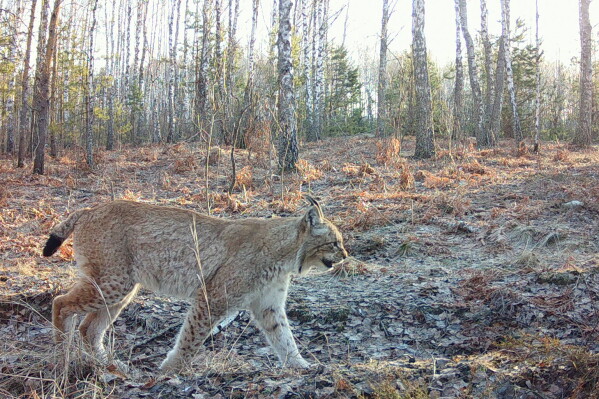
Not all species avoided human settlements. While wild boars and raccoon dogs seemed to avoid them, foxes and lynxes were more frequently detected near these sites. According to experts, this suggests that they used them as a source of resources. The Chernobyl exclusion zone is abandoned after the 1986 nuclear accident. It is an important natural laboratory for studying ecological restoration processes. The low human population in the area favors the increase in wildlife populations.
Changing the fauna
Chernobyl's fauna is changing its habits again. This led to the recolonization of the area by species that had become locally extinct before the catastrophe. For example, the brown bear or the Eurasian lynx. But also the elk, the deer, the wild boar or the wolf. A prolongation of military activity could generate more profound changes in habitat use. It could modify the behavior of species, long-term population dynamics and variations in community structure.
Leave a Reply