
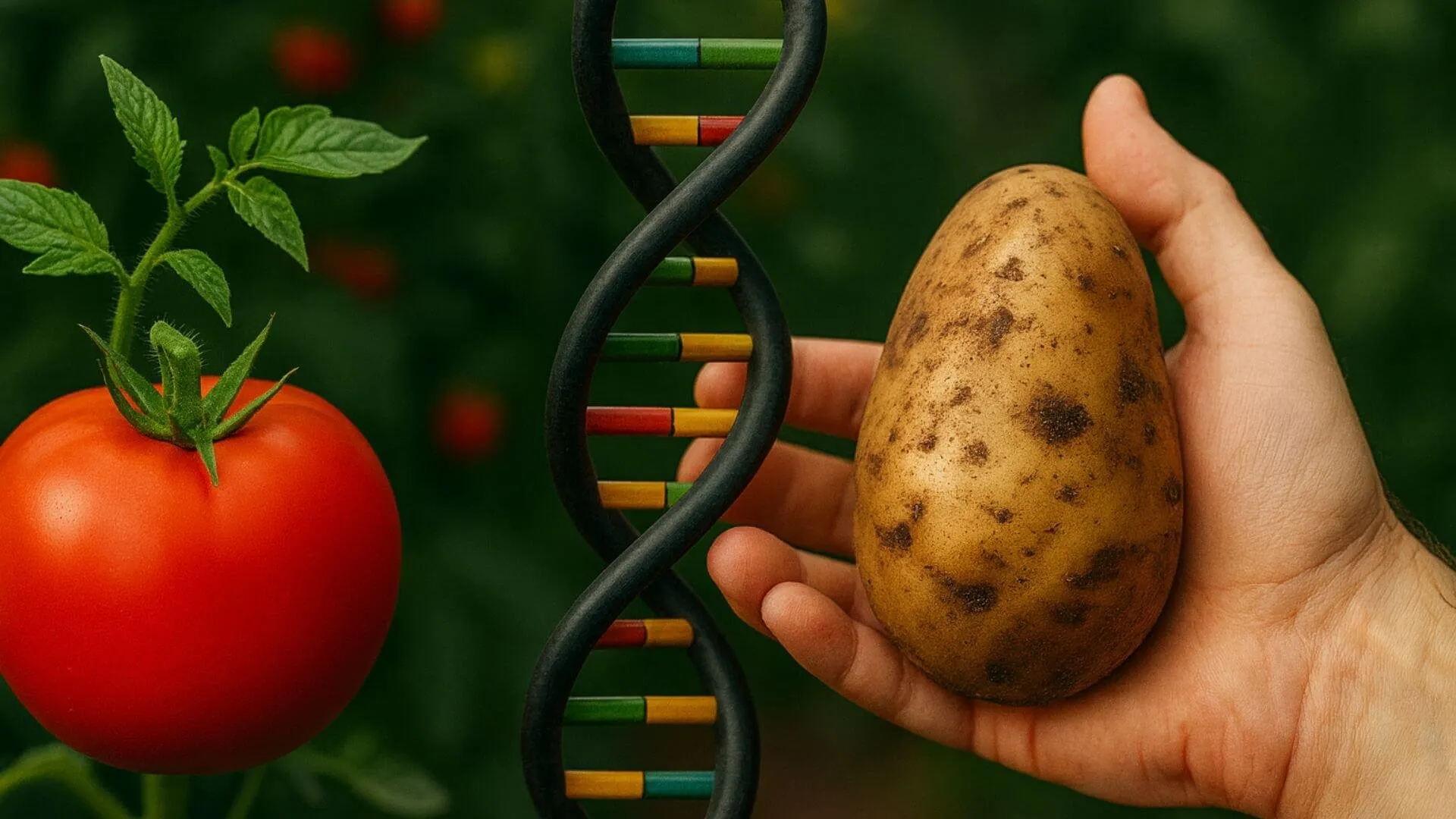
No one imagined it. It all started with the natural crossing in the wild between tomato plants and species similar to the potato of South America. This gave rise to the current potato about nine million years ago. Popes evolved from tomatoes. The study is in Cell magazine. Researchers from the Chinese Academy of Agricultural Sciences suggest it. This old evolutionary event triggered the formation of the tuber. It is the enlarged underground structure that stores the nutrients found in plants such as potatoes, ñames and taros.
The first potatoes
"The event promoted the evolution of new features, allowing the emergence of even more species," they say. "We have finally resolved the mystery of the origin of the potatoes." It is one of the most important crops in the world. The origin of the potato has intrigued scientists for a long time. Apparently, modern potato plants are almost identical to three species similar to Chile's potatoes, called Etuberosum. However, these plants do not produce tubers. According to phylogenetic analysis, potato plants are more closely related to tomatoes.
They analyzed 450 cultured potato genomes and 56 of wild potato species. "Wild potatoes are very difficult to show. We have the most complete collection of genomic data of wild potatoes ever analyzed," they detail. They discovered that each species of potato had genetic material of tomato plants. The potatoes originated from an old hybridization between them. They shared a common ancestor about 14 million years ago. They gave rise to the first potato plants with tubers about 9 million years ago.
New resistant species
Popes evolved from tomatoes. This evolutionary innovation coincided with the rapid rise of the Andes mountain range. It was a period in which new ecological environments arose. The first potatoes could quickly adapt to the changing environment. They survived the inclement weather in the mountains.
Tubers also allow potato plants to reproduce without seeds or pollination. They produce new plants simply sprouting from the tuber yolks. This characteristic allowed them to expand rapidly and occupy various ecological niches.
«The development of a tuber provided potatoes with a huge advantage in hostile environments. It promoted an explosion of new species. And contributed to the rich diversity of potatoes that we see and those that we depend today, ”they highlight.
- 0
- 0
- 0
- 0
- 0
- 0
Leave a Reply