

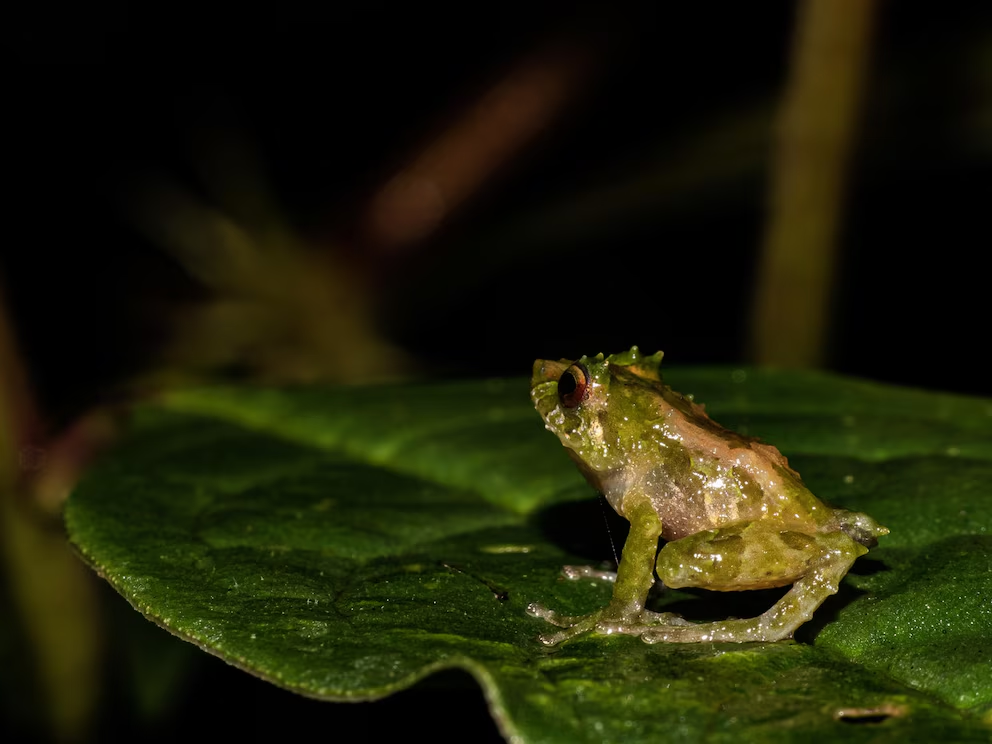
This is what the Ecuadorian and American researchers who found it said. The appearance of a new terrestrial frog happened in the mountains of the Ecuadorian jungle. The species had never been seen before. They named it Pristimantis fergusoni. It presents a distinctive combination of morphological characteristics that differentiate it from other spiny frogs in the region.
It has a short snout with a small papilla at the tip (more evident in males). Also prominent conical tubercles on the eyelids and heels. Regarding color, it has lime green, light orange or cinnamon tones and a striking scarlet color on the belly and groin. Especially intense in females and yellow iris with an orange horizontal stripe.
Ecuador
It is located in the Cerro Candelaria and Chamana reserves within the Llanganates-Sangay Ecological Corridor (in the province of Tungurahua, in the center of the country). It lives between 2,972 and 3,200 meters (m) above sea level, in upper montane forests characterized by herbaceous and shrubby vegetation. It only lives in two localities close to each other, which suggests a restricted distribution.
With this discovery, frogs of the genus Pristimantis currently comprise 627 species. They are particularly diverse in the northern Andes of South America. The greatest diversity is found on the eastern slopes of the Ecuadorian Andes. Several species exhibit conspicuous dorsal tubercles that produce a spiny, often greenish appearance.

Great variety
The appearance of a new frog reinforces the biological importance of the upper valley of the Pastaza River. In recent decades, at least 30 species of frogs have been described in this region. «The discovery of Pristimantis fergusoni expands knowledge about Ecuadorian biodiversity. “It emphasizes the urgency of conserving Andean ecosystems in the face of threats such as climate change, agricultural expansion and habitat loss,” highlights the National Biodiversity Institute of Ecuador.
Field work was carried out between 2008 and 2023 with detailed morphological analyzes and molecular studies carried out in laboratories in Quito. The new species is part of a clade of Andean spiny frogs. This helps clarify evolutionary relationships within this complex group.
Leave a Reply