
It is easy to miss the building known as Residencia en Chile. It was designed to integrate into the Atacama Desert. Its entrance is behind a heavy unmarked door, at the foot of a shallow ramp. The fascinating hotel for scientists mixes luxury, exclusivity and laboratory.
Outside, a desert. Upon entering the Residence, one enters a green oasis. There is a bright blue swimming pool. It looks like a Bond villain's lair, and the finale of the Bond film "Quantum of Solace" was filmed there, using the hallways, terraces and exterior as a setting.
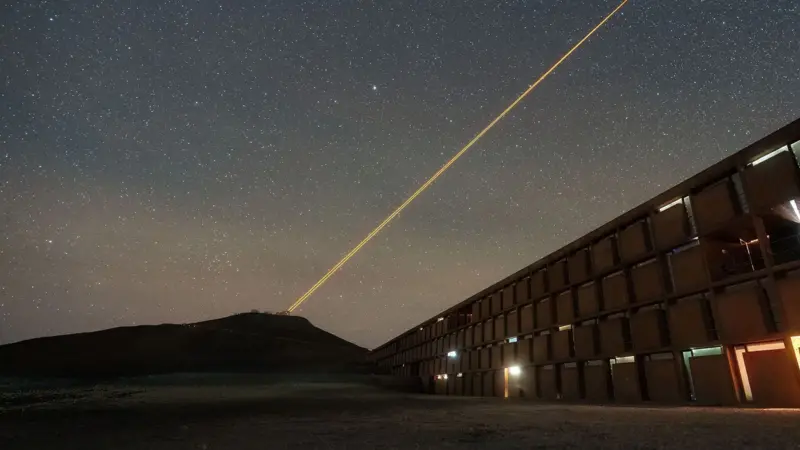
magnificent building
It is a hotel, but not one that is open to the general public. Its more than 100 rooms are occupied by astronomers and engineers. They work at nearby sky-observing facilities, such as the Very Large Telescope (VLT). It is owned and managed by the European Southern Observatory (ESO). It was designed to facilitate research in one of the most extreme environments on the planet.
It is in the middle of the harsh conditions of the Atacama and is a remarkable work of architecture. In fact, in 2009 the newspaper "The Guardian" included it among the "10 best buildings of the decade." One of its key features is the way it maintains darkness in its surroundings. The ground-based telescopes at ESO's Paranal observatory can be affected by the slightest amount of light. So they adopted various measures to reduce light pollution.
At night, cars must turn off their headlights while driving. There is no other source of light outside, except for the flashlight that each person carries with them. There are strict instructions to always direct it toward the ground. To ensure that the Residence also remains dark, the rooms have few windows. Any other glazed surfaces are covered with solid shutters at night. In the atrium, the translucent dome that keeps the plants alive during the day has a cover that unfolds every sunset.
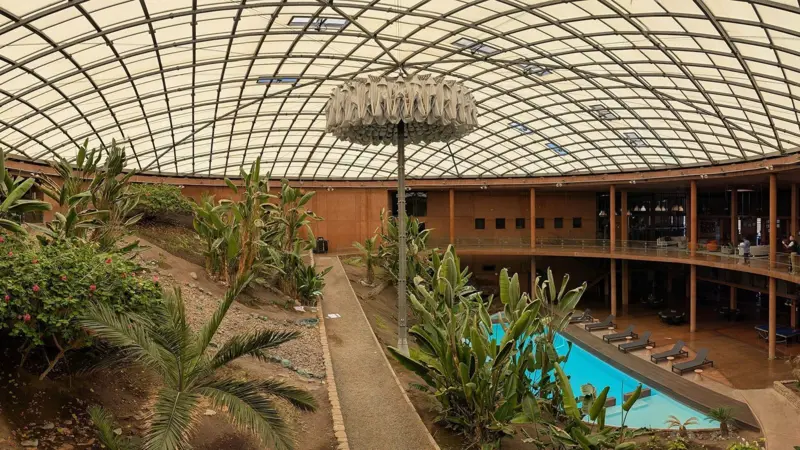
starry skies
At the fascinating hotel for scientists, alcohol is prohibited due to the altitude and the risk of dehydration. The complex is located more than 2,000 meters above sea level. Pre-briefings warn of the risk of feeling lightheaded or nauseated.
In addition to carefully observing the movement of the stars, scientists alternate day and night shifts. It is a tradition to watch the sun set over the Pacific while the astronomers take over at their shift change and the night begins. In the dark, telescopes can finally be activated to observe the night sky. If one wakes up at 02:00 and walks out the back door of the room directly onto the desert floor, one will see a dazzling star show. Few night skies on Earth are as impressive. This is one of the best places in the world for astronomy from Earth.
Leave a Reply