
It would happen in December 2032. A space rock more than 60 meters in diameter could impact the Moon with a power never recorded by the human eye. This is the asteroid 2024 YR4. The chance of crash is 4%. If it happens, the gigantic collision with the Moon will be visible from Earth.
The rock was discovered in January 2025 by the ATLAS system, a NASA-funded asteroid early detection program. The Moon is presented as its possible impact destination. And if that happens, we could witness a colossal collision from the comfort of our planet. It will be "the most energetic lunar impact ever recorded in human history," the document states.
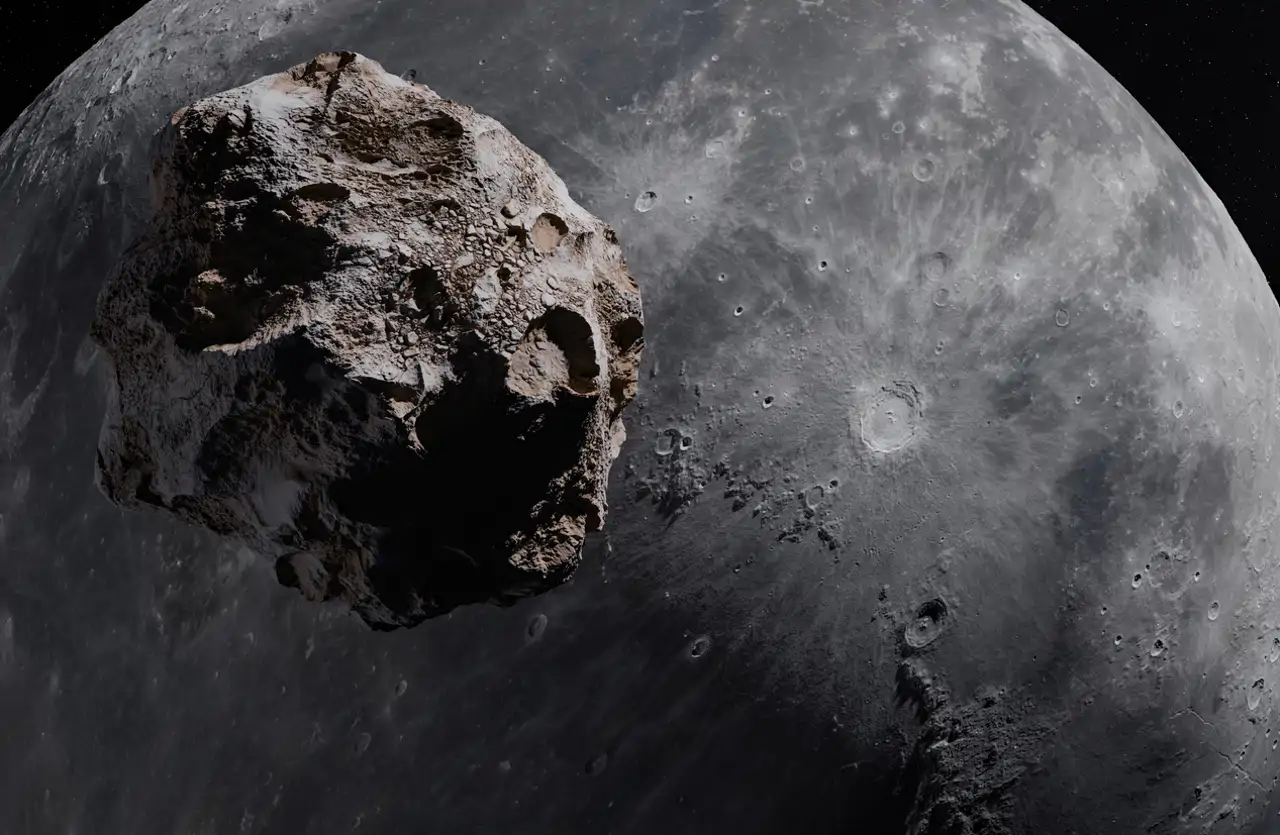
Visible from Earth
It would generate an optical flash visible from Earth. But that won't be all: several hours of infrared glow will follow. It is a type of thermal echo that will allow scientists to study the event like never before. The explosion could release up to 100 million metric tons of lunar material. Some of that dust could even escape into space, and perhaps touch Earth's atmosphere.
If this scenario comes to fruition, it will be a milestone for planetary science. It would be a monumental scenario to validate our understanding of asteroid impacts. The size of the asteroid is estimated between 40 and 90 meters wide. This range implies that, had it collided with Earth, the damage would have been considerably different depending on the point of impact.

No risk
If it had exploded in the atmosphere over the ocean, a relevant tsunami would not have been generated. In an urban region, even a mid-air explosion could have broken windows and damaged more fragile structures. NASA uses orbital data collected by multiple observatories to calculate the impact probability of these bodies. These models are constantly updated.
The debate about how to deflect an asteroid like 2024 YR4 is ongoing. But it's premature. Missions such as the DART probe demonstrate that it is possible to alter the trajectory of a celestial body through kinetic collision. But this technique depends on the size, composition and time available before impact. For now, it seems, we should not be worried. We could watch the asteroid impact from the comfort of a chair, unlike other impacts on the Moon.
Leave a Reply