
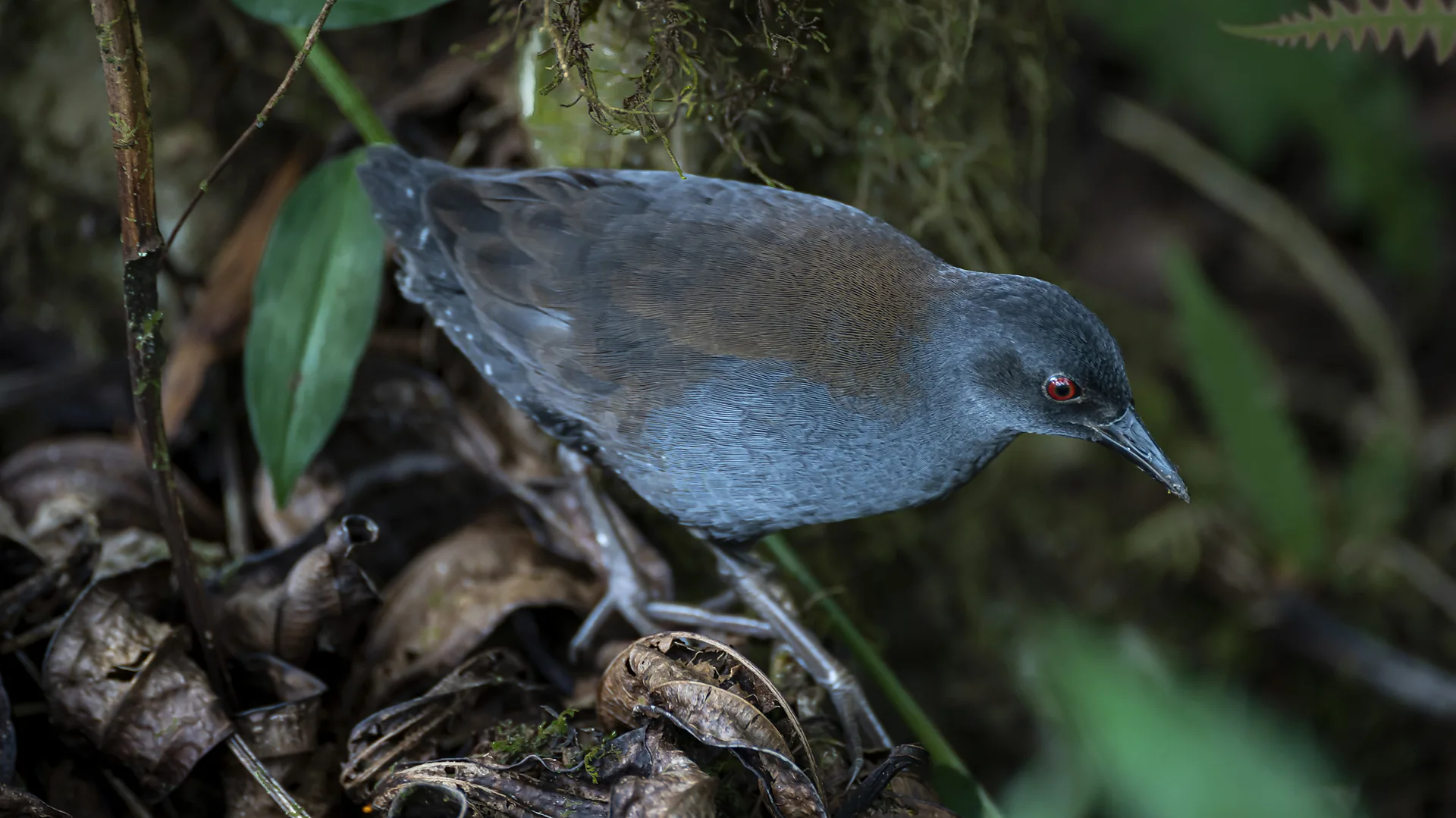
For almost 200 years, the Galapagos rail was missing from the island of Floreana. It was extinct on this small inhabited island in the Ecuadorian archipelago. Charles Darwin was the last person to record a sighting of one on Floreana. The missing bird that returned to the Galapagos had not yet said the last word. This year, following the elimination of rats and feral cats from Floreana, the bird surprised conservationists with its surprise reappearance on the island.
How the lost bird returned is a mystery. Other threatened birds have also recovered. Some even sing new melodies never heard before on the island. This change reveals new information about how a safer, almost predator-free environment can allow animals to experiment and innovate. "The Galapagos rail was something that I did not expect at all," agrees Paula Castaño. She is a wildlife veterinarian working for Island Conservation. "It just appeared."

Exciting find
Now it is very common to find them simply walking around the island. It is part of what scientists describe as an extraordinary return to life on Floreana. Invasive predators that had wreaked havoc on native species were removed. "This is an instantaneous explosion of these species, which until last year were considered very rare," they say.
In 2025, bird counts revealed something about several previously rare species. Galapagos pigeons, lava lizards, geckos and the dark-billed cuckoo. Now they appeared more frequently. But the most exciting find was the rediscovery of the Galapagos rail. «This bird had not been recorded in Floreana for centuries. The only historical evidence of its presence was a specimen collected by Darwin himself.
Evolution in action
The plan is to reintroduce 12 species that already existed on Floreana when Darwin visited, but have become locally extinct. Among them, giant tortoises. This adds to similar recovery stories seen in other parts of the archipelago, such as Pinzón Island. The giant tortoise was on the verge of extinction due to predation of its hatchlings by rats. They are now growing in number as the young survive.
The islands ended up having a huge influence on Darwin's most important legacy: his theory on the evolution of species. The birds he recorded, more than a dozen species of finches, are known as Darwin's finches. "The Galapagos Islands are a beautiful classic example of evolution in action," they say. The missing bird that returned to the Galapagos is part of that spectacular process.
Leave a Reply