
Ocean Census is a global initiative to discover new specimens in the oceans. The new 1,121 marine species within the last year surprise science. Among the creatures identified are a deep-sea ghost shark, a polychaete worm that lives in a "glass castle", as well as crabs, sea urchins and anemones. The number of finds is surprising. But it is estimated that 90% of oceanic species remain to be discovered.
“These discoveries are just a drop in the ocean,” said Oliver Steeds, director of Ocean Census. «It is believed that there are up to two million species in the ocean. "We have discovered more than 250,000," he said.
Extraordinary species
The discovery of new species, he said, is a relatively common part of the study of unexplored areas with new technologies. Discoveries continue to be made in areas that would be considered already well explored. Last year's findings represent the largest number of discoveries made in a 12-month period. They are a considerable increase compared to the 866 of the previous period.
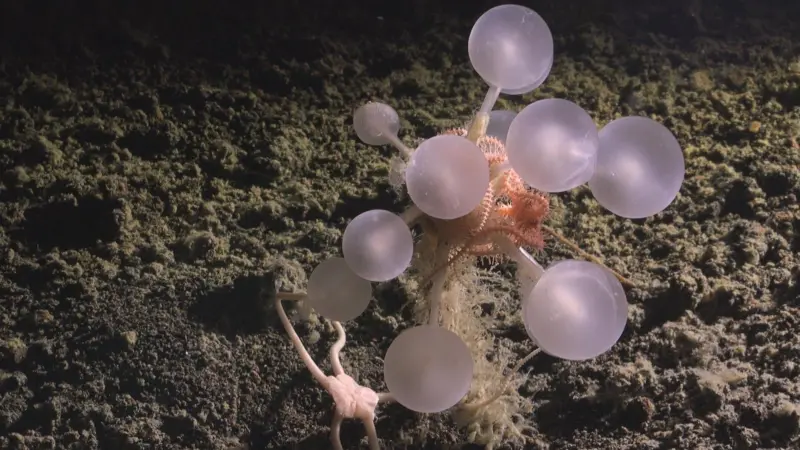
International teams undertook 13 expeditions through some of the most extreme and unexplored corners of the planet. From places like Japan and the Coral Sea, off the coast of Australia, to Papua New Guinea, the Sandwich Islands in the South Atlantic and Antarctica. They traveled to extraordinary depths of up to 6,575 m, more than the height of Everest Base Camp in Nepal. One of the newly identified creatures was the glass castle worm. It was at a depth of 791 m off the coast of Japan. He found himself living inside a glass sponge. It has a translucent skeleton formed by glass-like structural particles composed of silica. The worm lives in a symbiotic relationship within the sponge, meaning both benefit.
A new species of ghost shark was also discovered in the Coral Sea during an expedition in 2025. They are one of the most mysterious inhabitants of the ocean. They are distant relatives of sharks and rays. Their evolutionary lineage diverged about 400 million years ago. That is, they predate the dinosaurs.

They appear and disappear
A new species of ribbon worm was also found in East Timor, Southeast Asia. It has extraordinary biomedical importance, due to the colors and the chemical reactions it generates. Produces unique toxins. They are being investigated as possible treatments for Alzheimer's and schizophrenia. The new 1,121 marine species join thousands more. Scientists are working around the clock to discover endangered marine species. They warn that the oceans are already under increasing pressure. Carbon dioxide can have a big impact on the oceans, which have become 30% more acidic in the last 200 years.
Leave a Reply