
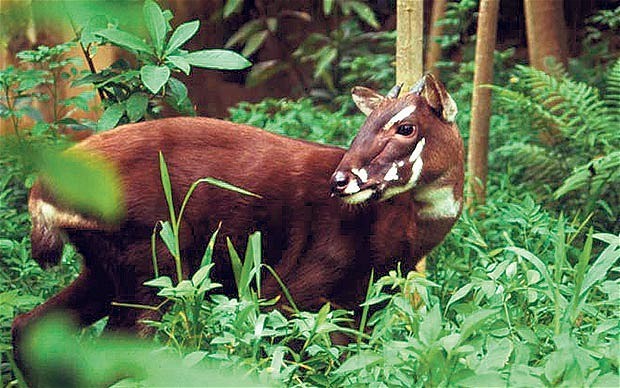
Scientists mapped the Saola genome, also known as Asian Unicorn. It is the last great terrestrial mammal described by science (1992). He is not seen in the wild since 2013. The possible extinction of the Asian unicorn worries science.
The most optimistic estimates indicate that there are less than 100 copies. It could also be extinct. They are still looking for it without success. He lives in the remote and steep forests of the Annamite mountains in Vietnam and Laos.

Hermits
Currently, the existence of living saolas cannot be tested or refuted. The last available evidence dates back to 2013, when one was captured with a trap camera. Given the remoteness of its habitat, it is extremely difficult to affirm with certainty if there are still some specimens. Some signals and signs still give us hope.
Fragments of Saola remains collected in hunter homes were found. The researchers generated full genomes of 26 Saolas. «It is surprising that it divides into two populations with considerable genetic differences. The division occurred between 5,000 and 20,000 years ago. This was completely unknown until then. ”The main author, Genís Garcia Erill, affirms in a statement.
Both populations are in decline since the last ice age. The total population of Saola never exceeded 5,000 individuals in the last 10,000 years. And this long -term decline means that both populations began to lose genetic diversity. «If we manage to gather at least a dozen Saolas there would be a good probability of long -term survival. It worked with other species on the edge of extinction, ”he says.
Difficult search
However, finding 12 saolas is not an easy task. But new research could help solve that problem. The genetic mapping opens new possibilities for the use of various technologies to locate the latest remaining saolas.
The possible extinction of the Asian unicorn or Saola can be avoided. Even so, they have their doubts about the possibilities of finding living saolas. «Scientists have been looking for Saolas since the 1990s. Since then the search has become increasingly difficult. There were more specimens at the time. We are not too optimistic. But we hope they continue out there "
Leave a Reply