
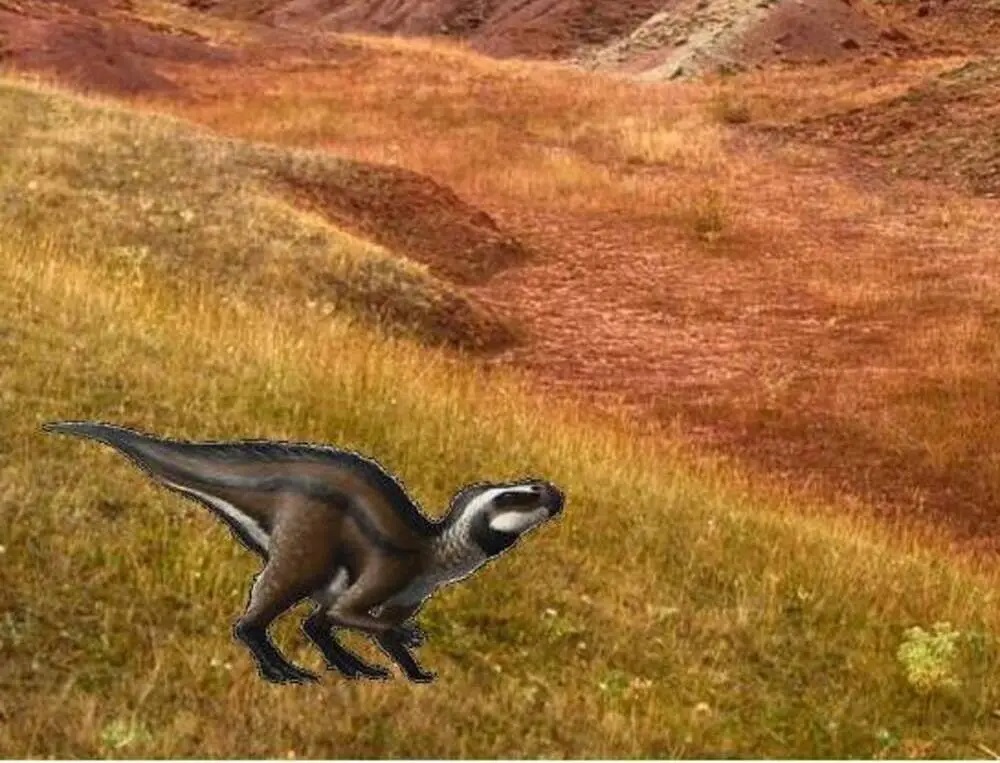
The discovery occurred at the Vegagete site, near Villanueva de Carazo (Burgos). There are about 800 bones, corresponding to six individuals. It is the smallest dinosaur in the world. It did not exceed 30 centimeters in height. This is 'Foskeia pelendonum', the "smallest known" ornithopod.
The name of the new species is a tribute to the Pelendones, a Celtiberian tribe that inhabited the area. It also refers to their unique way of eating. About 350 bones were identified that belonged to six individuals, from babies to adults.
New lineages
The general shape of the skull "differs markedly" from other ornithopod dinosaurs, the research notes. «It is very wide in its posterior area. Its jaw is highly developed to establish powerful chewing muscles. The front teeth are very small and I would not use them. And the posterior teeth are relatively large, supporting the chewing process," the statement added.
The animal could have compensated for its reduction in size with another attribute. It would be a new way of chewing to eat vegetables with a certain hardness. The femur has "unique" anatomical characteristics, which have been interpreted "as the change in the way they walk throughout their lives: young people were bipedal and adults quadrupedal." They lived in the Upper Cretaceous, between 80 and 65 million years ago. But their origin and ancestors were unknown, so they were considered a ghost lineage. The new species from Burgos, 125 million years old, fills a gap in knowledge about the evolution of this group of dinosaurs.
Fast and slender-legged
The legs of this animal grew very quickly and in the adult they were very slender. He would not have had great physical stamina to run long distances to escape predators. I would probably do short, fast runs to safe areas. The smallest dinosaur in the world had a skull 5.5 centimeters long. Its body length was between 50 and 60 centimeters. Its small size was interpreted as a form of dwarfism caused by living on islands where food resources are scarce.
«There is another hypothesis: in reality they would have become progressively larger, since the pressure of predators on prey would be less towards the end of the Cretaceous. Already in the Upper Cretaceous they were probably quadrupeds throughout their lives, and not bipeds as they were usually represented.
Leave a Reply