
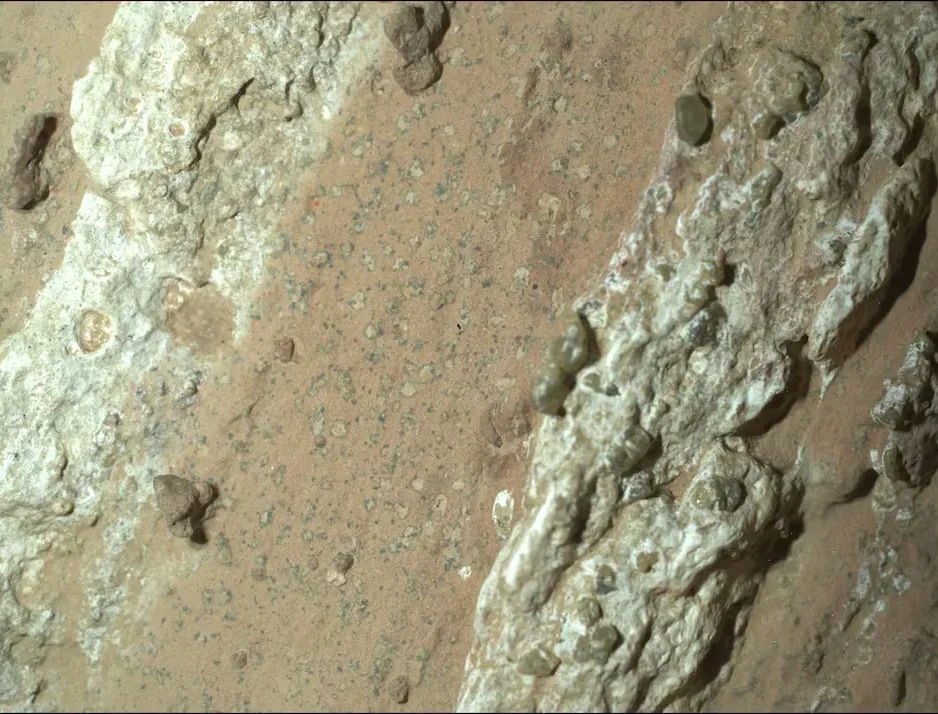
Unusual rocks discovered on Mars contain the most convincing evidence. to the date of possible life past on the red planet. The lutolites - or sedimentary rocks - were found in the dusty bed of a river. They were found by the Nasa Perseverance explorer. In them would be the traces of life on Mars.
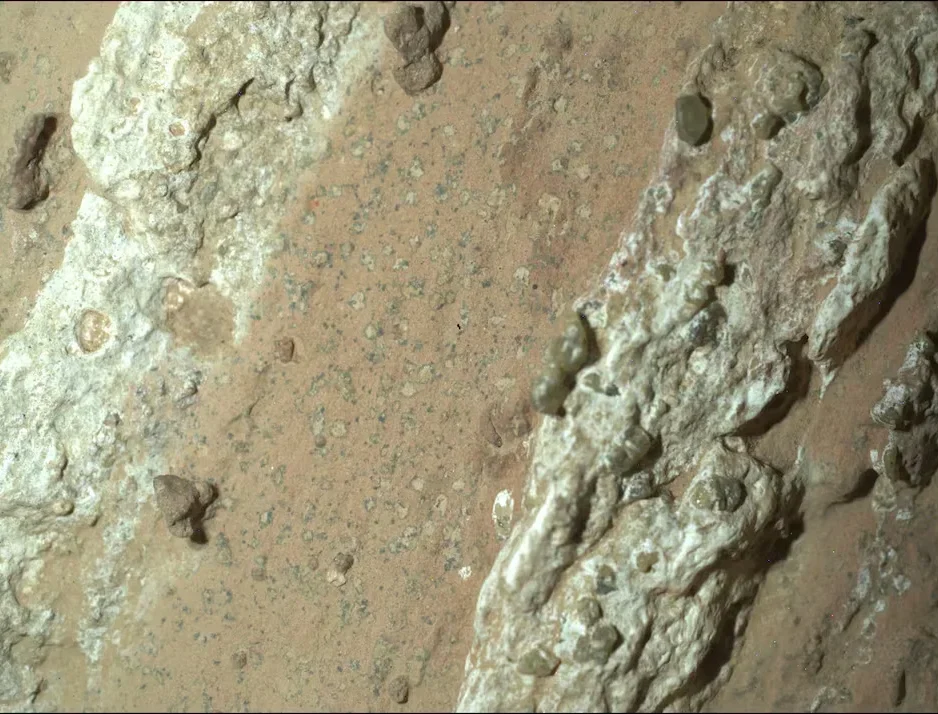
The rocks are dotted with intriguing brands whose shape the team described as "leopard spots" and "poppy seeds." These formations contain minerals produced by chemical reactions. They would be associated with ancient microbes. "We hadn't had something like that before, and I think it's the great achievement," said Professor Sanjeev Gupta. He is a planetary scientist of Imperial College in London and one of the authors. «They are characteristics that could be explained by biology, by microbial processes. It gives us a reason to investigate ».
Possible microbes
The only way to confirm that minerals were created by microbes would be to bring the rocks to the earth for analysis. There is evidence that Mars of Mars had a dense and water atmosphere. It is a promising place to look for past life. The Perseverance, who landed on the Martian surface in 2021, was sent to seek indications of biology.
He found the rocks at the bottom of a canyon excavated by the river in an area called Bright Angel formation. They are around 3.5 billion years. They are a type of rock called lutolita, a fine grain rock formed from clays.
«We believe that what we have found is evidence of a set of chemical reactions. They took place in the sludge deposited at the bottom of a lake. He could take place between mud and organic matter, ”they explain. In similar conditions on Earth, chemical reactions that create minerals are usually driven by microbes.

Bring the tests
The Perseverance has been collecting samples during its Martian exploration, including the rocks found in the Bright Angel formation. These were stored in containers and will be deposited on the Martian surface. They will expect a mission that can bring them to Earth.
The traces of life on Mars excite researchers. They are eager to have the rocks in their hands. "We need to have them on earth," they declare. «I think that to have full confidence, most scientists would like to see and examine these rocks. Among the samples to be brought to Earth, they are the highest priority ».
Leave a Reply