
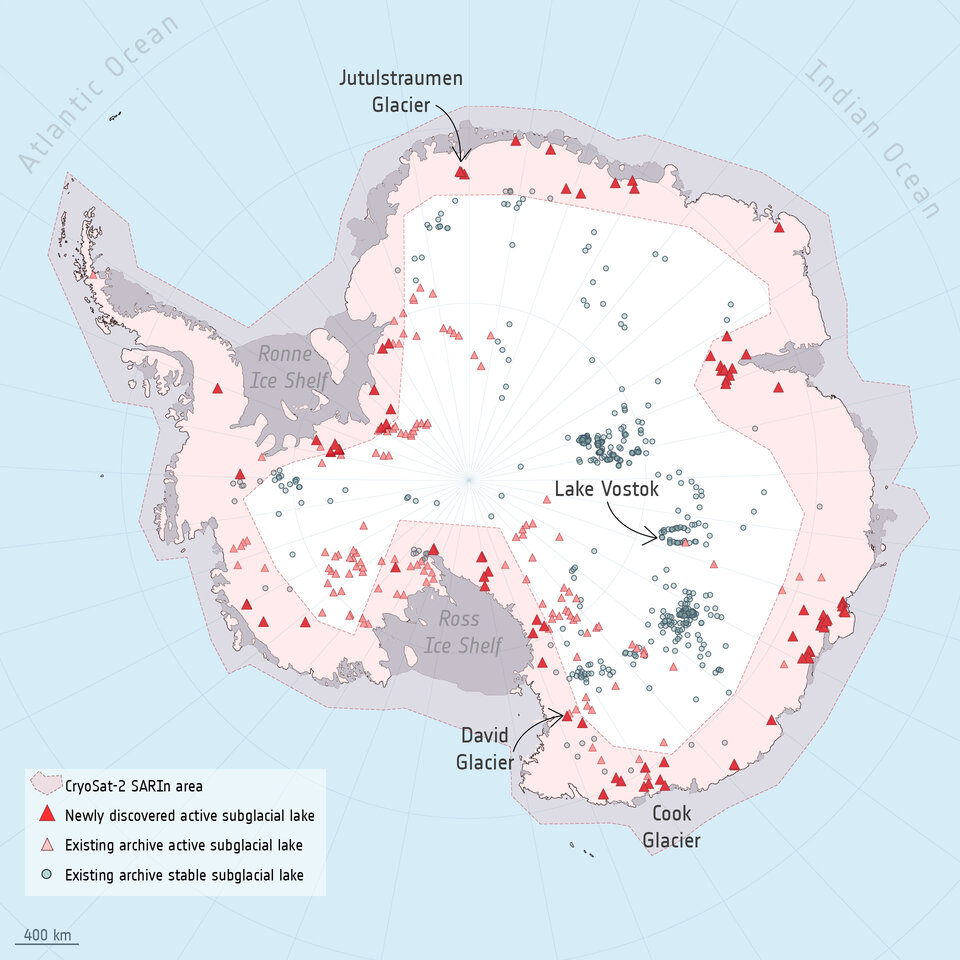
They are hidden under the biggest mass of ice on earth. They are hundreds of subglacial lakes. They form a crucial part of the ice structure of Antarctica, affecting the movement and stability of glaciers. The lakes discovered under Antarctica influence the global sea level increase.
The research is in Nature Communications. Active subglacial lakes are drained and filled cyclically. They offer an exceptional perspective of what happens well below the surface, at the base of the ice layer, the ESA reports. The investigation also identified new drainage paths under the ice layer, including five interconnected networks of subgllacial lakes.
Ice to the sea
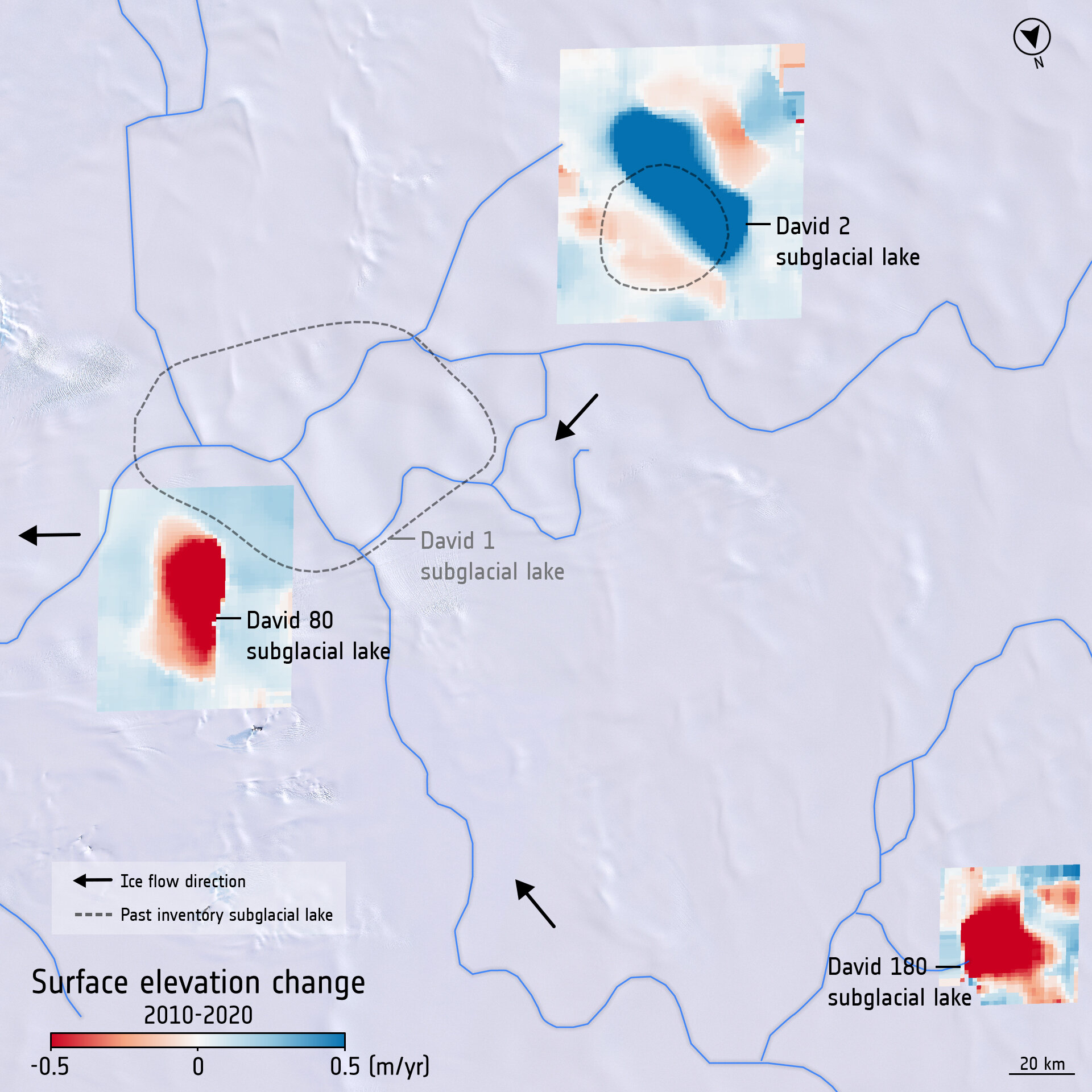
The author is Sally Wilson, researcher at the University of Leeds. He explained that knowledge about subglacial lakes and water flow is limited. They are buried under hundreds of meters of ice. «It is incredibly difficult to observe events of filling and emptying of subglacial lakes under these conditions. It takes several months or years. Only 36 complete cycles had been observed worldwide. We observe 12 more full and empty events, which raises the total to 48 ».
Subglacial thaw water is formed due to the geothermal heat of the surface. This thaw water can accumulate on the surface of the rock bed and drain periodically. Reduces friction between ice and the rock on which it sits, allowing the ice to slide more quickly towards the ocean.
Gigantic Lake
Not all subglacial lakes are considered assets. Many are considered stable because it is not known if they are filled or drained. The largest known subglacial lake is Lake Vostok, under Eastern Antarctica. It contains between 5,000 and 65,000 km2 of water under 4 km of ice. It is enough to fill the large cannon and overflow at least 25 %. While it is considered stable, if drained, it would affect the stability of the Antarctic ice layer. And the global sea level.
The lakes discovered under Antarctica provide information for the models of the ice layer and the weather. By monitoring these phenomena, scientists can improve their understanding of interactions between the ice layer, rock bed, ocean and atmosphere. It is key to understanding the future stability of ice layers.
Leave a Reply