
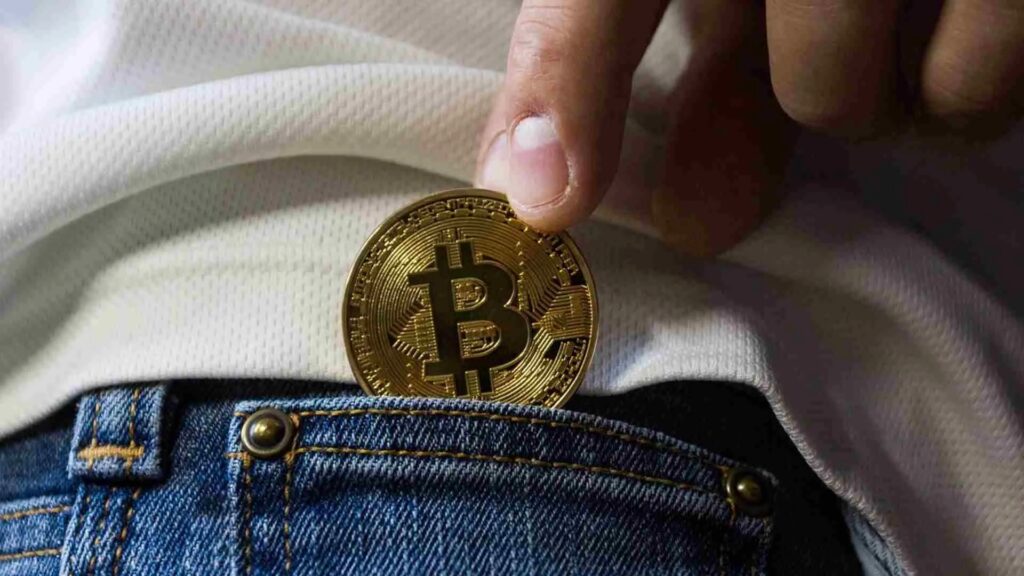
Today it is time to speak with seriousness of an issue that many celebrate without stopping to think twice: the use of cryptocurrencies as a payment method in Spain. According to recent data, 19% of Spaniards who have cryptoactives already use them to make purchases. Is this a sample of maturity of the ecosystem, or are we facing a more impulsive trend, fueled by the enthusiasm of the moment? We are going to unravel this matter as it should, with a scalpel and not with easy applause.
Because if there is something we have learned after decades of observing the financial behavior of the digital consumer, it is that innovation without technical understanding ends up being more dangerous than useful. There is much talk about financial freedom and decentralization, but few know what it really implies paying with crypto: from Fees gas to tax implications, through volatility and lack of protection in case of dispute. And that is where the problems for newcomers begin.
Spend cryptocurrencies: freedom or imprudence disguised as modernity
The most common mistake among new users is to think that paying with cryptocurrencies automatically equals being at the forefront. But we are going to put our feet on the ground. If one pays a 2 euro coffee with Bitcoin and the network commission at that time is 3 euros, that is not efficiency, it is operational ignorance.
Diagnose when it is convenient to use crypto for payments is not something that can be learned watching a couple of videos in networks. You have to understand, for example, how Lightning Network works if we are talking about Bitcoin, or what is an algorithmic Stablin in front of a backed by Fiat reserves. You have to know how to read the Slippage, estimate conversion costs, and above all, evaluate whether the trade that the crypt also has infrastructure for returns or after -sales care. Because paying is easy. Solving problems is not so much.
That is why before launching digital assets, it would be more worth forming in its foundations, understanding the rules of the game, and knowing when it is time to buy, sell, and yes, also to spend.
The dilemma of paying with a volatile asset
It is no novelty that cryptocurrencies are highly volatile assets. The price of a token can rise or lower 10% in a matter of hours. So the big question is: does it make sense to pay with something that tomorrow could be worth double or half?
Here we enter a land where financial psychology weighs as much as technology. Long -term mentality users see their cryptocurrencies as a value reserve. The most aggressive focus on investing in the short term in cryptocurrencies, taking advantage of market peaks and arbitration opportunities. But very few think of their tokens as simple coins for everyday use.
And this has logic. If we believe that an asset is going to rise in value, the last thing we want is to spend it on something that is not valued the same. Therefore, the massive use of crypto as a payment method still clashes with an inescapable reality: its behavior is closer to that of a speculative financial instrument than that of a traditional currency.
Stablecoins and the way to real functionality
Now, not everything is black or white. There are tools within the ecosystem that are designed precisely to solve these dilemmas. Stablecoins, for example, represent a very interesting intermediate point. Assets such as USDT or USDC maintain parity with the US dollar and offer the possibility of paying with crypto without suffering the roller coaster of typical market prices.
The problem is that not all businesses accept Stablecoins, and many users do not even distinguish them from other more popular cryptocurrencies. Here the need for education and technical training comes into play. It is not enough to have a wallet. You have to know what each token is used, how it is stored, and what type of transaction allows.
Companies that have made the leap to accept payments in crypto usually do so for strategic reasons: visibility, modernization, or simply to attract a new type of consumer. But infrastructure, taxation and user experience are still far from the levels of simplicity we see in traditional solutions such as Bizum or Contactless cards.
The future of crypto payments in Spain: Evolution or passenger fashion?
We are in an early transition stage, that is clear. That 19% of Spanish cryptocurrency users are already using them as a payment method is an interesting, but not conclusive signal. It could indicate that we are facing the birth of a new financial culture, or simply that a group of users wants to experiment without calculating too much.
What is certain is that paying with crypto, today, remains more an ideological or symbolic act than a true improvement in efficiency or cost. And those who do not understand the technical insurance behind each transaction are playing a game whose end they do not control.
So before launching ourselves to pay with our digital assets as if they were euros, it is convenient to ask ourselves a simple question: are we using technology with criteria, or just because it sounds modern? Because in finance, as in life, not everything new is necessarily better.
Leave a Reply