
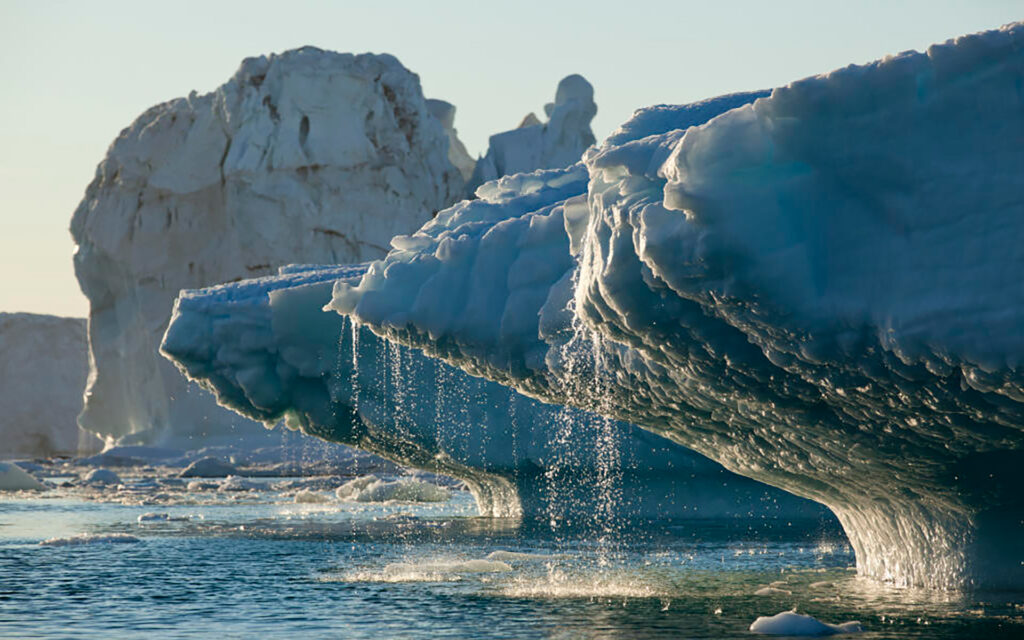
For many, there is no going back. Science confirms it time and time again. The ice in Antarctica could melt by 20% by the year 2100. And this will cause catastrophic consequences throughout the world. This is reported by the 'Daily Mail' newspaper, citing a study on climate change in the Antarctic Peninsula. Antarctica is seen in crisis in 2100.
big changes
The study is an international team of researchers. «In the worst case scenario, sea ice coverage around the peninsula could be reduced by 20% by 2100. This would be devastating for polar species. Among them, penguins and whales. But it could also have disastrous consequences throughout the world," writes the Daily Mail.
In addition, the increase in the temperature of ocean waters will have other consequences. It may lead to an intensification of natural disasters around the world. «The changes in Antarctica do not stay in Antarctica. Although Antarctica is far away, the changes that occur there will affect the rest of the world. "It will be through changes in sea level, oceanic and atmospheric connections and changes in circulation." This was highlighted by Professor Bevan Davies, from the University of Newcastle, according to the newspaper.
Researchers consider the Antarctic Peninsula very important in ensuring that the global climate remains cool and stable. Vast stretches of white ice reflect heat back into space and retain fresh water. Otherwise, it would raise sea levels and weaken vital ocean currents, according to the publication.

Uncontrolled heat
How to understand how the region could continue to change in the future? The researchers used computer models to predict what would happen under low, medium-high and high emissions scenarios.
"In the low emissions scenario, global temperatures increase 1.8 °C above the pre-industrial average by 2100. In the medium-high emissions scenario, temperatures would increase 3.6 °C by 2100. And in the high emissions scenario, the world would warm 4.4 °C," the newspaper detailed. Antarctica in crisis in 2100 is almost an inevitable reality.
Leave a Reply